How to Identify Ancient Woodland in the UK: 8 Field Signs to Look For
Ancient woodland is not simply old. In the UK, the term usually means land that has been continuously wooded since at least 1600 in England, Wales and Northern Ireland, or since 1750 in Scotland. That long continuity leaves traces: plants that spread slowly, coppice stools swollen with age, boundary banks, and a wood that follows the shape of the land rather than a fence line. No single clue proves it. The skill is in reading several together.
Plants That Rarely Lie
Begin with the ground flora. Ancient woodland indicator species are plants that mostly occur in long-established woods. They are not infallible. A lone bluebell in a hedge is not evidence. A spread of them across a wood, alongside other indicators, is.
Look for:
- Dog's mercury (Mercurialis perennis) — often carpets the ground in spring.
- Wood anemone (Anemone nemorosa) — starry white flowers before the canopy closes.
- Bluebell (Hyacinthoides non-scripta) — native bluebells have narrow leaves, drooping one-sided spikes and cream anthers.
- Ramsons or wild garlic (Allium ursinum) — garlic scent and white star flowers.
- Wood sorrel (Oxalis acetosella) — clover-like leaves and delicate white flowers.
- Yellow archangel (Lamiastrum galeobdolon) — not the variegated garden escape.
- Herb Paris (Paris quadrifolia) — a strong indicator where it occurs.
- Early purple orchid (Orchis mascula) — spotted leaves and purple spikes in spring.
- Wild service tree (Sorbus torminalis) — a tree indicator, with lobed leaves and brown berries.
Regional lists vary. In eastern England, oxlip and wood barley carry weight; in the west, mosses and lichens add evidence. Use a county checklist if you can.
1. Ancient Woodland Indicator Plants
Don't just tick species. Note abundance and pattern. Dog's mercury forming large patches, bluebells in drifts, or wood anemone across several compartments is more convincing than a few scattered plants. Some indicators also grow in hedges, old lanes and secondary woods, so treat them as supporting evidence.
2. Bluebell Carpets and Other Clues
Native bluebell is the classic sign, but it is often planted and hybridises with Spanish bluebell. Check the flowers: native spikes droop to one side, with cream anthers and a sweet scent. Spanish and hybrid bluebells are more upright, with blue anthers and little scent. Even a true native bluebell carpet needs other signs to confirm ancient status.
The Physical Evidence Underfoot
The ground itself remembers. Coppicing, boundary digging and old tracks leave shapes that survive for centuries.
3. Old Coppice Stools
Coppicing is cutting trees to ground level on a rotation, letting them regrow multiple stems. Over decades, the base becomes a stool. Ancient stools are large, raised and mossy, often a metre or more across. Hazel, ash, field maple, hornbeam, lime and sweet chestnut are common coppice species. Look for a ring of stems around a decayed or hollow centre, with moss, lichen and fungi. A stool growing on a boundary bank is especially telling. Not every ancient wood was coppiced, and plantations can retain old stools, so read them with the wider evidence.
4. Boundary Banks, Ditches and Woodbanks
Woodbanks are earth banks, often with a ditch alongside, that mark old woodland boundaries. They may run around the edge or cut through the wood, dividing former compartments. Look for banks that are sinuous, follow contours, or line up with parish boundaries. Old coppice stools, veteran trees or laid hedges on top add weight. Ditches may be on one side or both, depending on drainage and age. A bank is not proof on its own, but a well-preserved woodbank with ancient stools is a strong clue.
Trees, Deadwood and Archaeology
5. Veteran Trees and Deadwood
Veteran trees are those with characteristics of great age: a large girth for the species, a hollowing trunk, dead limbs, fungal brackets, water pockets and bark crevices. Pollards — trees cut above grazing height — are especially common in old wood-pasture and ancient woods. Deadwood matters too. Ancient woods tend to hold more standing and fallen deadwood than recent plantations, supporting beetles, fungi, lichens and mosses. In a plantation on an ancient woodland site, old trees and deadwood may be the best surviving evidence.
6. Charcoal Hearths, Quarries and Paths
Look for flat, circular patches of black soil and charcoal on slopes or near tracks. These are charcoal hearths, where wood was burned for fuel. Saw pits appear as rectangular depressions with spoil on one side. Old quarries, boundary stones, holloways and trackways show long use. These features are not present in every ancient wood, and they can be damaged by digging or bike tracks. Record what you see with photographs and a grid reference rather than disturbing the ground.
Landscape Context and Continuity
7. Woodland Shape, Edges and Hedges
Ancient woods often have irregular shapes that follow streams, steep slopes, wet flushes or poor soils. Straight, geometric edges can suggest recent planting, though not always. Old hedges along the boundary may contain field maple, hazel, dogwood, spindle, guelder rose and other woody species. Compare the wood with historic maps: tithe maps, enclosure awards and old Ordnance Survey sheets can show whether the boundary has shifted. The Ancient Woodland Inventory is the best starting point, but it is not complete everywhere.
8. Fungi, Lichens and Mosses
Fungi, lichens and mosses can add evidence, but they need specialist knowledge. Some lichens, such as tree lungwort in western Britain, are associated with long-established woodland and clean, humid air. A rich community of deadwood fungi suggests continuity. Mosses and liverworts can also indicate ancient woodland, especially in the wetter west. Treat these as supporting signs, not a simple test. Never pick or collect rare species.
Practical: Confirming a Suspected Ancient Woodland
If a wood looks promising, build a case rather than relying on one feature. A practical sequence:
- Check the Ancient Woodland Inventory, local records centre or planning authority maps before you visit.
- Survey in spring for ground flora and again in summer for trees, sedges and grasses. Early spring is best for bluebells, wood anemone and dog's mercury.
- Walk several transects. Record which indicator plants are present, how abundant they are, and whether they form patches or are scattered.
- Look for physical clues: coppice stools, woodbanks, veteran trees, charcoal hearths, saw pits and old tracks.
- Compare the wood with historic maps and aerial photographs. Look for boundary changes, lost compartments and old lanes.
- Note threats such as rhododendron, cherry laurel, snowberry, bracken, deer browsing and conifer planting. Report significant finds to your local wildlife trust or records centre.
No single sign is conclusive. A wood with several strong indicators, old coppice stools, a woodbank and map evidence is very likely ancient. If you need a formal judgement, ask your county ecologist or local ancient woodland group. And remember that ancient woodland is fragile: stay on paths, keep dogs under control, take photographs rather than samples, and leave the charcoal, fungi and flowers where they are.
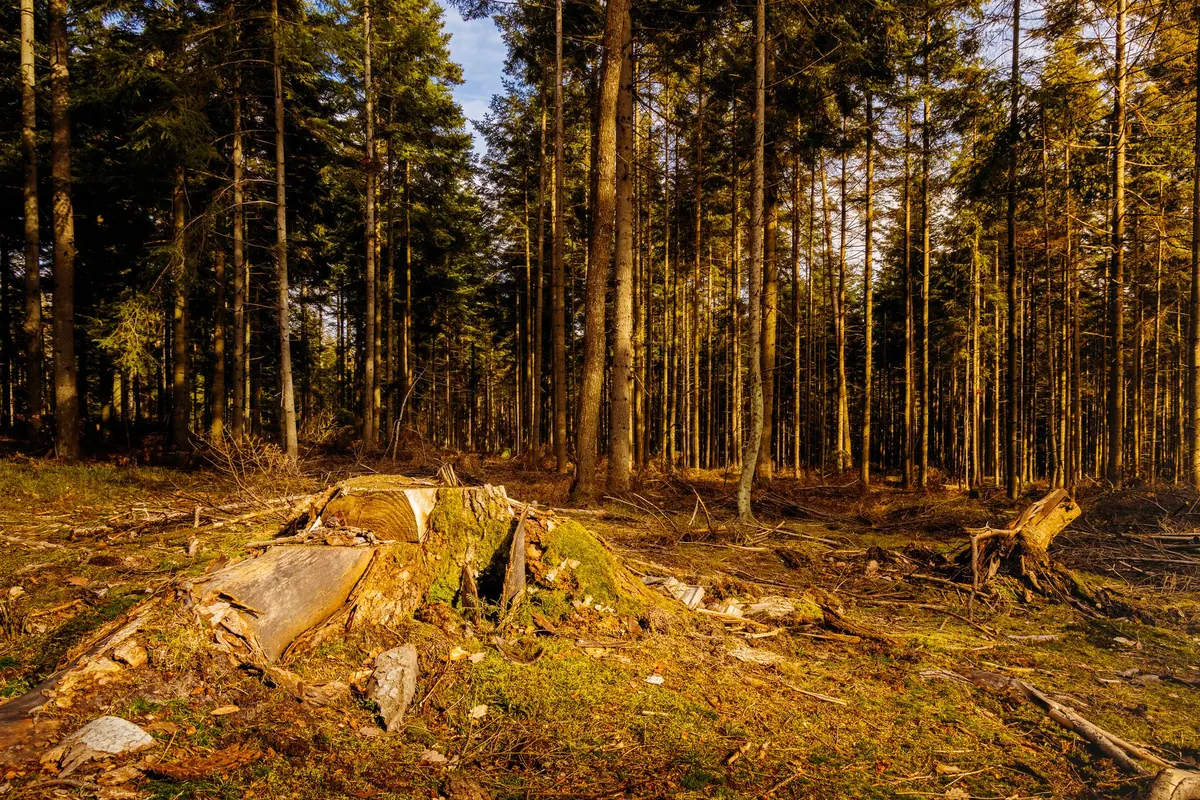
Coppicing Explained: Why Traditional Woodland Management Helps British Wildlife
Coppicing — cutting trees near the ground so they regrow — keeps British woods light, open and rich in...

Hedgehog or Badger? How to Identify Night-Time Garden Visitors in the UK
Learn to tell hedgehogs, badgers and other night-time garden visitors apart by their tracks, droppings,...
About Us